

NDEAM: Know Your Employment Rights
News originally published by
Minnesota Council on Disability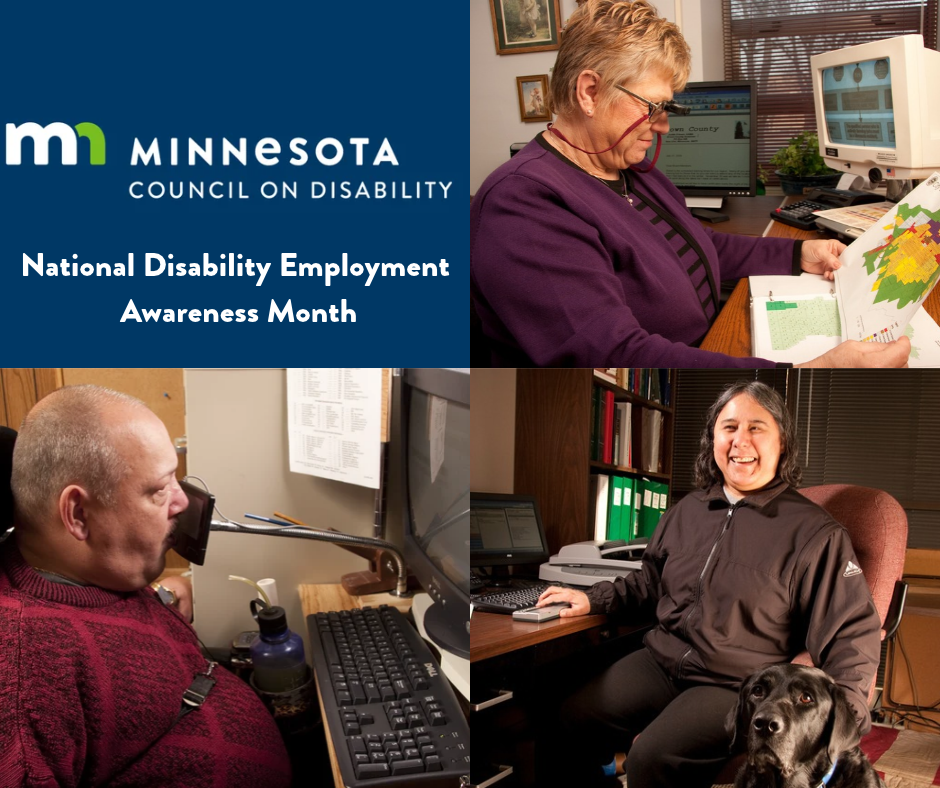 October is National Disability Employment Awareness Month (NDEAM). It’s a time to remember that people with disabilities have enforceable employment rights under federal and Minnesota law. Employers must provide reasonable accommodations (unless doing so causes undue hardship) and must not discriminate in hiring, firing, pay, or other terms and conditions of employment.
The Minnesota Human Rights Act applies regardless of employer size, while ADA Title I generally applies to private employers with 15 or more employees.
Your Core Right: Reasonable Accommodation
A reasonable accommodation is a change to the job or workplace that enables you to perform the essential functions of your job. Examples include assistive technology, flexible schedules, policy adjustments, or physical access improvements in the workplace. Most accommodations cost nothing to implement. A Job Accommodation Network (JAN) employer survey found 61% cost $0, and many others involve modest, one‑time expenses with benefits for productivity and retention.
How to Request an Accommodation
- Identify what you need to perform the essential functions of your job. Examples include a screen reader, modified schedule, or sign language interpreter.
- Ask in writing or verbally. Document your request and keep notes.
- Participate in the interactive process. Work with your supervisor or human resource professional to find an effective accommodation for your needs. Supervisors play a key role in the accommodations process and in ensuring employees have the tools and resources to do their jobs.
If You Are Discriminated Against
If you are discriminated against in the workplace, Minnesota and federal law provide ways to file a formal complaint.
What the Data Shows
- Nationally, people with disabilities had an unemployment rate of 7.8%, compared with 3.9% for people without disabilities. (Disability Employment Statistics)
- In Minnesota, discrimination charges most often involve employment, and disability is the most common basis of discrimination.
- Employment is 55.1% of all discrimination charges.
- Within employment, disability is 36% of discrimination charges.
- Across all areas, disability is the basis for 37.2% of discrimination charges. (Biannual Report: July-Dec. 2024, MDHR [PDF])
More Information
Legal Disclaimer:
EIN Presswire provides this news content "as is" without warranty of any kind. We do not accept any responsibility or liability for the accuracy, content, images, videos, licenses, completeness, legality, or reliability of the information contained in this article. If you have any complaints or copyright issues related to this article, kindly contact the author above.
